
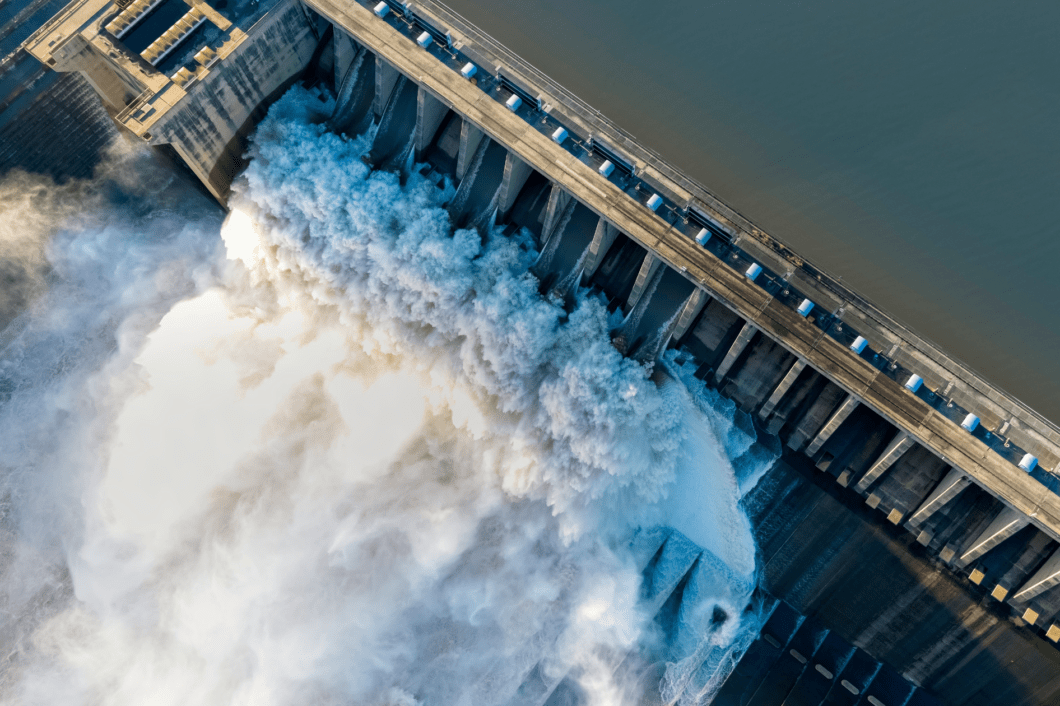
When people think about waterpower growth, they often picture large new dams and the kind of major infrastructure announcements that come with ribbon cuttings and political fanfare. It’s an understandable image. Canada’s waterpower history is full of those moments, from the construction of the La Grande complex to the harnessing of Churchill Falls to the commissioning of the G.M. Shrum Generating Station, and they have shaped how the public understands what progress in this sector looks like.
But a significant and often overlooked part of Canada’s clean energy story is happening differently. Across the country, waterpower facilities that have been generating electricity for decades are being refurbished, upgraded, and modernized. Turbines are being replaced. Controls are being brought up to current technology. Civil structures are being reinforced. These projects don’t come with press conferences, and they rarely generate the kind of public attention that a new greenfield development might attract. And yet, in terms of their contribution to Canada’s clean energy capacity and their role in the long-term sustainability of Canada’s waterpower fleet, they are just as consequential as any new build.
The growth most people don’t see
Canada’s waterpower sector is on track to add roughly 11,000 MW of new capacity over the coming decade, representing approximately $100 billion in planned investments by 2035.
What often gets lost in the telling is where that capacity is actually coming from. Greenfield development accounts for 5,700 MW of that total, while expansions and refurbishments contribute another 5,300 MW — nearly as much as all planned greenfield development combined.
That reality challenges a narrative that has taken hold in some corners of the energy policy world: that waterpower growth is stalling, that the sector is coasting on legacy assets without adding meaningful new capacity. A substantial share of the sector’s growth over the next decade will come from projects that are already built, already permitted, and already delivering power to communities, being made to work harder and last longer through deliberate, sustained investment.
Refurbishment extends the life of hydro facilities by decades through targeted replacement of turbines, generators, and other mechanical and electrical equipment. Because these components represent a small portion of the original development investment, refurbishment projects are highly cost-effective — particularly compared to energy sources where the entire facility must be replaced at the end of its life.
Refurbishment also provides an opportunity to increase a plant’s capacity by replacing turbines and generators with higher-output units. Hydro-Québec is studying a 20% capacity increase at the La Grande complex — equivalent to 2,000 MW — and work is underway to increase the output of Churchill Falls by approximately 10%. That work is running alongside active refurbishments at Carillon, Rapide-Blanc, Outardes-2, and Trenche, each representing investments in the hundreds of millions of dollars, with completions staggered through the late 2020s and into the mid-2030s. Rio Tinto, meanwhile, is investing $2 billion in the Isle-Maligne Power Plant.
In Ontario, OPG is simultaneously managing refurbishments at the Sir Adam Beck stations in the Niagara Region, the R.H. Saunders Generating Station on the St. Lawrence, facilities across Northern Ontario, and several smaller stations in the east of the province, with combined investments running into the billions and timelines extending to 2045. In Nova Scotia, NS Power’s refurbishment of the Wreck Cove Generating Station is currently in progress.
Expansion of existing facilities offers another path to increased capacity without building new dams and reservoirs. Some plants — including BC Hydro’s Revelstoke and NL Hydro’s Bay d’Espoir facilities — were originally constructed with provisions for additional generators to be added later. The planned expansion of Churchill Falls will see the construction of a new underground powerhouse adjacent to the existing facility, meaning that plant’s capacity will grow through both refurbishment and expansion.
More than 25 projects in total are currently planned or underway across Canada, requiring tens of thousands of skilled workers over the coming decade. They represent one of the largest ongoing construction programs in the country, and one that most Canadians would never know is happening.
Getting more from what we already have
Building new waterpower from scratch is a long and complex undertaking — one that requires environmental assessments, permits, community engagement, and major civil construction in often remote locations, with timelines that can stretch over decades and intensive capital requirements from day one.
That makes the case for refurbishment even stronger. The upfront investment has already been made, and the site, the transmission connections, the community relationships, and the civil structures are all already in place. What changes are the generating units, control systems, and mechanical components that determine how much power a facility can produce — and how reliably it can deliver it.
Because the foundational infrastructure is already in place, refurbishment can deliver meaningful new capacity at a fraction of the cost of building entirely new generation. Over decades, that advantage is one of the reasons waterpower has remained among the most affordable and stable sources of electricity in Canada.
The result is more energy from the same physical footprint, with lower incremental environmental impact and faster delivery than a new project of equivalent scale. Refurbishments also extend the operating life of a generational asset by approximately 50 years, meaning that original investments made generations ago continue to generate returns well into the future. In a sector built around infrastructure designed to last generations, that kind of return on investment is the point. For consumers and industrial users, it also tends to support more affordable electricity rates over time, a benefit that rarely makes headlines but compounds meaningfully over decades.
Why this story matters now
There is a perception in some energy policy circles that waterpower growth is modest, even flat. However, that picture doesn’t reflect what’s actually happening on the ground. The data tells a more active story, and the projects speak for themselves. But when the sector isn’t seen as growing, it doesn’t get treated as though it is, and that has real implications for financing, policy, and government support. The case for refurbishment, and for the broader waterpower sector, depends in part on decision-makers having an accurate understanding of the scale and ambition of what is already underway.
The stakes are also higher right now than they have been in some time. As electricity demand grows and wind and solar account for an increasing share of new capacity additions, the grid needs firm, dispatchable power to balance variable generation and maintain reliability. A modernized waterpower fleet is what makes that possible. Refurbishment is part of how Canada ensures that backbone stays strong, and part of how it maintains energy sovereignty with domestically owned, Canadian-built infrastructure that communities have relied on for generations.
Canada still holds over 150,000 MW of untapped waterpower potential — more than double its current installed capacity. Realizing that potential will require building in two places at once: on new sites that haven’t broken ground yet, and inside stations that have been generating clean power for generations. Right now, one of those fronts isn’t getting nearly enough credit.